
Prototype production is a pivotal step in product development. From the initial concept to the final product, understanding prototype production can impact the success of your project.
Here are three things to know about prototype production.
1. What Are Different Types of Prototypes?
When embarking on prototype production, it is essential to understand the various types of prototypes available. Each type serves a specific purpose and is suitable for different stages of product development. The choice of prototype depends on factors such as complexity, budget, and the particular features you wish to test. Some of the most common types of prototypes are visual prototypes, functional prototypes, and proof of concept prototypes.
Visual prototypes emphasize the design and visual elements of the product. They are commonly used during initial development phases to showcase the design direction and aesthetic appeal. Though they may lack functionality, these prototypes enable stakeholders to see the intended design and offer input on visual components. As the name suggests, functional prototypes are designed to test the functionality of a product. These prototypes are typically more detailed and may include working mechanisms that allow you to evaluate how the product performs. They are crucial for identifying technical issues and making necessary improvements.
Proof of concept prototypes aim to demonstrate the feasibility of a particular idea or concept. They are usually simple, focusing on one or two key features or functions. Proof of concept prototypes help determine whether an idea is viable before moving on to more complex prototypes. Understanding the different types of prototypes enables you to choose the most appropriate one for your project.
2. What Are Some Key Steps in the Prototype Production Process?
The prototype production process involves several key steps that ensure your design is thoroughly tested and refined. Each step plays a critical role in transforming your concept into a tangible prototype. Understanding these steps will help you navigate the production process more effectively. The first step in prototype production is to clearly define your objectives and requirements. This involves understanding what you intend to achieve with your prototype and identifying the key features and functions that need to be tested.
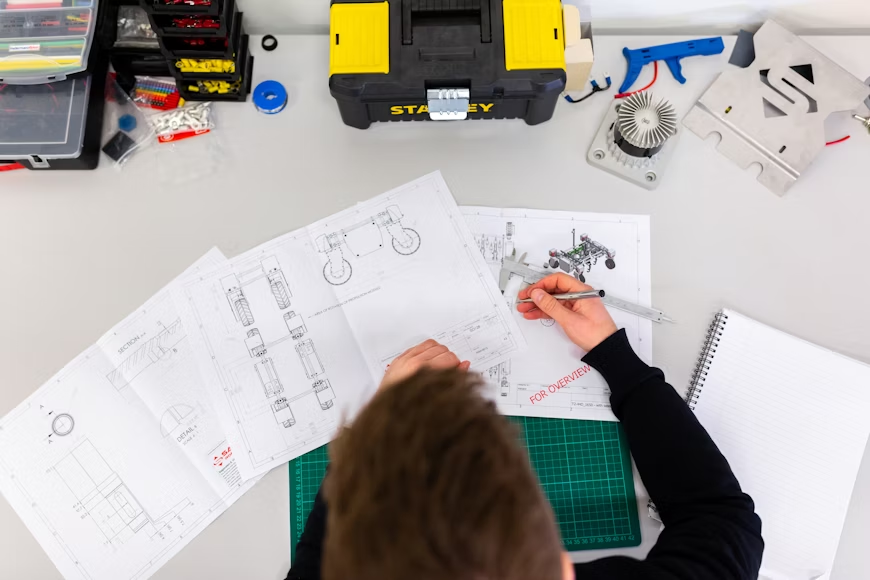
Once you have defined your objectives, the next step is to design and develop the prototype. This involves creating detailed drawings and specifications that outline the design. Depending on the complexity of the product, you may use computer-aided design (CAD) software to create digital models. During this phase, you might consider employing custom metal stamping services if your prototype involves metal components. Metal stamping allows for precision and efficiency in creating complex shapes and designs.
After the design phase, it is time to build and test the prototype. This step involves the actual construction of the prototype using the materials and techniques outlined in the design. Once built, the prototype undergoes rigorous testing to evaluate its performance and functionality. Testing helps identify any issues or flaws that need to be addressed before moving forward.
3. What Tools and Technologies Can Be Used in Prototype Production?
Prototype production has evolved significantly with the advent of advanced tools and technologies. These innovations have streamlined the process, making it more efficient and precise. Understanding the tools and technologies available can enhance your prototype production efforts and lead to a higher quality final product. For example, CAD software is an invaluable tool in prototype production, allowing you to create detailed digital models of your design. These models provide a comprehensive view of the product, enabling you to visualize and refine your ideas before physical production begins. CAD software also allows for easy modifications, saving time and reducing costs associated with design changes.
3D printing has revolutionized prototype production by offering a fast and cost-effective way to create physical models. This technology enables you to produce complex shapes and designs with precision, making it ideal for functional prototypes. 3D printing also allows for rapid prototyping, where multiple iterations can be produced and tested quickly, facilitating faster development cycles. Also, metal stamping is a technique used to create precise metal components for prototypes. It involves using dies to shape metal sheets into the desired form.
Conclusion
Prototype production is an important phase in the product development journey, offering insights and opportunities to refine your design before full-scale production. By understanding the different types of prototypes, key steps in the production process, and the tools and technologies available, you are better equipped to navigate this critical stage effectively.
