
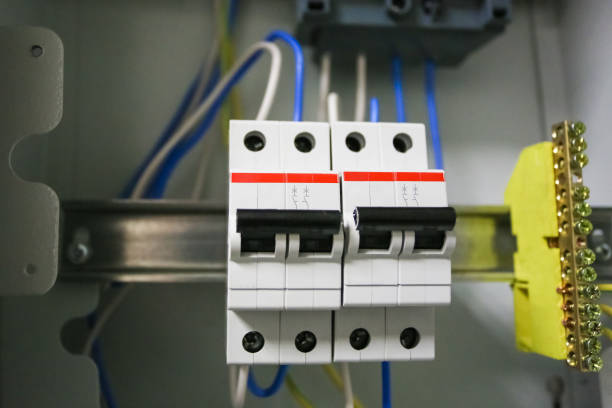
Electric systems are highly complicated, and they are prone to several ill situations, including overcurrent and voltage spikes. Electricians and the homeowner can use several kinds of electrical safety devices in order to protect these systems. The AC power surge protector as well as the conventional circuit breaker can be considered as two of the most widespread mix-ups in this area. Even though their aim is to save your electrical system, their purposes, mechanism, and degree of protection are very different. It is crucial to get to know their differences and in case you are to make a decision concerning electrical safety then in both residential, commercial and industrial premises.
In the article we shall discuss the underlying distinction between AC power surge protectors and ordinary circuit breakers delving into their functions, their functionality as well as the value they will play to the overall electrical security. This will assist you to make wise choices when you are an end user, a facility manager or a distributor aiming at stocking wholesale AC power surge protector units and other safety parts.
Differences in Purpose, Mechanism and Operation
Despite the fact that both the AC power surge protectors and the traditional circuit breakers are used for the same purpose of protecting electrical systems, they operate far differently. A conventional circuit breaker is usually aimed at recognizing and operating overcurrent conditions. These are short circuits and overloads, when the current passing through the circuit becomes larger than it is safe. When this occurs, the breaker trips thereby stopping electrical flow before further damage or even a fire can occur. Externally, circuit breakers might use either thermal, based on a heating element through a metallic strip (bimetallic strip) and which bends when heated, or a magnetic principle (electromagnet that is fast responding to excess current). These are mechanical gadgets, which can be reset once the problem has been fixed.
Conversely, the AC power surge protectors do not check the current levels but rather react on the voltage spikes. These spikes can result because of lightning, sudden grid switching or a large machinery start up. In order to maintain safety against damage to the connected equipment Surge Protectors utilise electronic components, which may be Metal Oxide Varistors (MOVs), gas discharge tubes (GDTs), or TVS diodes, to redirect the surplus voltage safely to ground before it can cause damage to devices. These elements react in nanoseconds almost immediately so as to maintain the voltage levels at a safe level. In contrast to circuit breakers, surge protectors neither break power flow nor protect against malicious voltage surges but prevent power flow instead by containing and dissipating the energy and redirecting it. The point to remember is that surge protectors protect against transient voltage phenomena, breakers protect against sustained overcurrent hazards, etc.- both are special electrical safety devices with specialised capabilities.
Installation Considerations and Scenarios of Applications
The environment and a particular type of electrical threats determine where and how you use these devices to a great extent. Circuit breakers are basic units that can be seen in almost all electrical panels. Breakers prevent dangerous current overloads to the entire infrastructure whether in an office building, a home or a manufacturing plant. These are electrical code-required devices, are normally installed during original wiring or panel upgrade, and are the bane of troubleshooters. When they are installed, you are sure that they can last years without any inspection or replacement.
However, surge protectors applied to protect AC power take a more selective form, according to the value and vulnerability of equipment being protected. Plug-in surge protectors can be used in the home to protect appliances such as television, gaming units or home computers. In commercial and industrial applications, it is common that surge protection is hardwired to the main service panel in order to protect throughout the building. It is particularly needed in places where large HVAC units, elevators, or equipment that may produce internal surges are in use and also where there are frequent lightning storms. A major distinction in the practice of maintenance is that surge protectors also get worn out, especially when they have undergone several surge hits. Many units have either indicator lights or audible alarms that indicate that maintenance is required. In general, implementing both kinds of devices, in particular, in the facilities where sensitive equipment is present, guarantees a highly good and stable electrical system. To consider all possible applications of certain use cases and address as many different needs of the clients as possible, it would be a good idea to recommend electricians and distributors to include a wholesale AC power surge protector as an addition to the regular breakers.
Myths Regarding Safety Electrical Devices
Electrical safety devices are usually misrepresented although they play key roles in the operations of electrical equipment. Another myth is that a circuit breaker can offer protection against any electric problem including electrical surges. This is not the case, a breaker is not able to sense and respond to any rapidly rising transient voltages, and that is where surge protectors come to the picture. The other misconception is that surge protectors are alike in every way. Actually, the degree of protection is based on clamping voltage, energy absorption rating and compound response time of the device. Other users are also erroneously thinking that once one gets a surge protector installed, it would last a lifetime. As a matter of fact, some of the surge protectors have a short lifespan and may fail without warning. Conversely, it is also not accurate to suppose that the surge protectors can only be required in an industrial setting. Due to the modern trend of using smart appliances and home automation, it is possible to say that residential systems are equally vulnerable. The training of users on the difference will help in ensuring that the two forms of electrical safety devices are handled adequately and well maintained to provide prolonged protection.
Electrical Safety Complementary Roles
Instead of treating these devices as one would have to trade off, they are rather complementary. Circuit breakers and surge protectors have different protective applications and they work best when both are installed. Circuit breakers perform well in preventing the flow of current when there is an overload or short circuiting and this safeguards the electrical wiring and eliminates the risk of fire breakouts. Nevertheless they miss out on voltage spikes and become unable to respond fast enough to prevent a transient spike. Surge protectors, on the reverse side are reactively lightning quick and clamp excessive voltages, although do not break a circuit given an overcurrent.
See, what you get when you put those two together on your electrical system, is a two-level protection system: the breaker takes care of long-term electrical problems which would otherwise burn out your wiring, and the surge protector protects your electronics in case of immediate damage due to short-term, strong voltage impulses. This two layer back up system is particularly important in the contemporary world which is cluttered with sensitive electronics devices including smart homes, hospitals, data centres and industrial automation systems. The two gadgets are the staples of a full scope electrical safety gadget strategy, and their joint implementation will provide resilience, security, and cost savings in the long term.
Finally, Learnings: Put Together a Safer, Smarter System
When it comes to electrical protection the two most important assets are knowledge and strategy. AC power surge protectors and traditional circuit breakers are not mutually exclusive devices; they are just the elements of an extended layered defense mechanism. Whereas circuit breakers will save you in case of a long-term current overload, surge protectors will react promptly to a voltage surge that will not make a sound when it kills your treasured electronics. The recognition of the differences in their role allows improved planning and implementation both in system design, maintenance, or improvement.
As a homeowner, engineer, facility manager or supplier, make sure you take into account the two protection strategies. Surge protection is part of your design, especially where sensitive or valuable equipment is involved, and never miss the elementary precaution which circuit breakers offer against the larger system. And whatever the business you are in on the supply side concerning protective equipment, having the full supply of both circuit breaker and wholesale power surge protector versions of those products will make sure that you are responding to the real world requirements of contemporary infrastructure. In the electrical safety devices, protective completeness is the order of the day-and it all depends on the knowledge that one has.
