
Table of Contents
- Introduction
- AI-Driven Operational Efficiency
- Outcome as Agentic Solution (OaAS)
- Full-Stack AI Services
- AI in Retail Transformation
- Spatial Intelligence in Enterprise AI
- ModelOps for AI Governance
- Challenges and Considerations
- Conclusion
Artificial Intelligence (AI) has evolved from a futuristic vision to a foundational element in modern enterprise operations. Companies of all sizes are now integrating AI-driven solutions to optimize workflows, boost decision-making, and create more engaging customer experiences. This wave of adoption is propelling a new era of enterprise operating models, with organizations seeking to harness AI for competitive advantage. Industry leaders such as C3 AI play a central role in accelerating this transformation by delivering scalable AI solutions tailored to complex business environments. As AI adoption grows, enterprises are moving beyond traditional automation and into intelligent systems capable of learning and adapting to dynamic business needs. From back-office efficiency to outcome-focused delivery models, artificial intelligence is redefining what is possible in business. The urgency for robust governance, ethical considerations, and seamless human-AI collaboration has never been more apparent in this rapidly evolving landscape. Early adopters are already seeing substantial benefits, including cost savings, more accurate decision-making, and stronger customer loyalty. However, as more organizations embrace these new operating models, issues related to implementation complexities and maintaining ethical standards have emerged as crucial factors for sustainable success.
AI-Driven Operational Efficiency
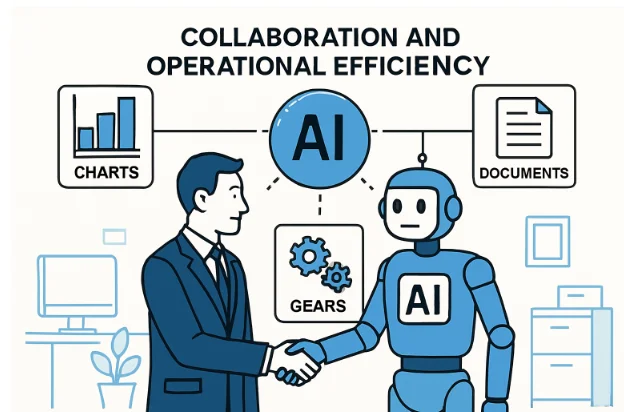
Enterprises are deploying AI to create efficient, cost-effective operational structures. Automated systems can now manage IT service requests independently by interpreting context and resolving issues without human support. This transformation accelerates response times and frees employees to focus on tasks that require critical thinking and creativity. The result is a more flexible, scalable business that responds faster to shifting market demands while reducing operational overhead.
AI-driven efficiency extends to core business functions such as finance, HR, and supply chain management, where repetitive, mundane tasks are replaced with intelligent automation. Predictive analytics helps organizations anticipate demand and optimize resource allocation, while smart systems enhance compliance and risk mitigation. As the footprint of AI grows, continuous improvement and adaptation become central themes for businesses determined to stay ahead.
Outcome as Agentic Solution (OaAS)
The emergence of Outcome as Agentic Solution (OaAS) marks a departure from traditional software-centric services. In this model, organizations deploy AI agents that autonomously deliver outcomes aligned with predefined business goals, for example, automating supply chain management or clinical data analysis. This hands-off, result-oriented approach offers significant advantages in efficiency, consistency, and accountability.
The OaAS model is especially compelling in sectors where rapid, data-driven decision-making is critical, such as healthcare and logistics. With autonomous agents handling everything from diagnostics to route planning, human teams can focus on strategy, innovation, and direct client engagement. Nevertheless, the scalability of OaAS depends on strong governance and robust data protection measures to safeguard sensitive information, as discussed in ITPro.
Full-Stack AI Services
Modern enterprises are adopting end-to-end, or full-stack, AI service models. Unlike traditional approaches that offer standalone tools, full-stack providers deliver integrated solutions that blend artificial intelligence and human expertise throughout the entire workflow. This approach is exemplified by companies such as LILT, which combines machine translation with linguistic specialists to ensure tone, nuance, and context are retained in global content localization.
This integrated model enables continuous learning and iterative improvement, with feedback loops refining the AI’s capabilities over time. It allows organizations to quickly adapt to new opportunities and market demands, maintaining a competitive edge. Organizations leveraging full-stack AI services often benefit from higher-quality outputs, faster time-to-market, and better alignment with strategic objectives.
The shift toward comprehensive services requires coordinated collaboration across technical teams, business units, and external partners. It also emphasizes the importance of human insights in validating and enhancing AI-driven outcomes.
AI in Retail Transformation
Retailers worldwide are reimagining their business models by leveraging artificial intelligence. AI-driven insights optimize operations, personalize shopper experiences, and drive targeted marketing campaigns. The move from isolated experimentation to enterprise-wide implementation reflects a maturing understanding of AI’s potential. Leading retailers use robust data platforms and agile governance to rapidly scale solutions while remaining compliant with privacy regulations.
In the customer experience domain, AI tailors product recommendations, manages inventory in real time, and automates service interactions. The outcome is an enhanced shopping journey resulting in greater customer satisfaction and loyalty. Yet as organizations scale their capabilities, they must address data integration, talent management, and regulatory compliance issues.
Spatial Intelligence in Enterprise AI
AI is increasingly equipped with spatial intelligence, enabling innovative applications in manufacturing, logistics, and facility management. By interpreting location-based and physical environment data, AI systems enable enterprises to optimize warehouse layouts, monitor movement patterns, and support remote teams through tools such as augmented reality (AR).
Spatial intelligence is fueling the development of advanced technologies, including AR glasses for remote maintenance and humanoid robots capable of navigating complex spaces. These innovations enhance productivity and safety, especially in settings that demand precision and situational awareness. As more industries recognize the value of spatial data, investment in this area is expected to accelerate, creating new possibilities for operational excellence.
ModelOps for AI Governance
The proliferation of machine learning models across enterprise environments necessitates disciplined management practices. ModelOps is emerging as a critical framework for overseeing the development, deployment, and monitoring of AI models, ensuring they remain reliable and aligned with business objectives. This practice bridges the gap between data science and operational teams, helping organizations derive sustained value from their AI investments.
By establishing processes for model validation, performance tracking, and risk management, ModelOps helps organizations adapt to regulatory requirements and shifting business priorities. Incorporating ModelOps into enterprise AI strategies is essential for scaling AI safely and effectively.
Challenges and Considerations
The widespread adoption of AI is accompanied by fundamental challenges. Security issues, ethical dilemmas, and the need for continuous oversight must be addressed to avoid unintended consequences. Enterprises should establish clear governance frameworks and prioritize ethical AI practices to maintain stakeholder trust and regulatory compliance.
In addition, ongoing employee training and education are essential. Ensuring that the workforce understands the capabilities and limitations of AI not only reduces resistance to change but also maximizes the value realized from these technologies. Building a culture of transparency and accountability lays the foundation for responsible AI adoption.
Conclusion
Enterprises sit at the threshold of transformative change as artificial intelligence reshapes how organizations operate and deliver value. Models such as OaAS, full-stack services, and spatial intelligence are pushing the boundaries of what is achievable, positioning early adopters for significant growth. The key to long-term success lies in thoughtful governance, ethical commitment, and collaboration between human and artificial intelligence. By responsibly embracing these new operating models, organizations can unlock greater efficiency, enhanced innovation, and lasting competitive advantage.
