
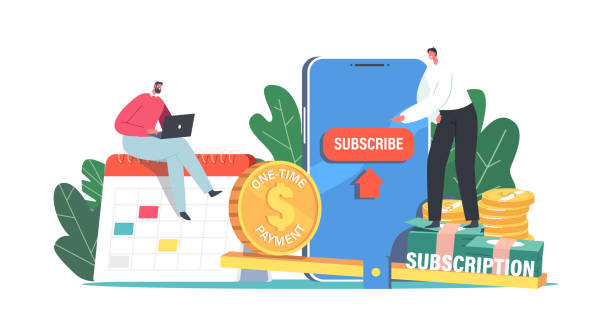
Subscription-based businesses thrive on predictability. Monthly or annual renewals, consistent customer relationships, and steady cash inflows make the model appealing to founders and investors alike. Yet behind this appealing structure lies a growing financial challenge that many SaaS, membership, and recurring revenue companies quietly struggle with—accounts receivable strain.
As businesses scale, so too does the complexity of collecting payments on time. A few late invoices might not seem like much at first, but when hundreds—or thousands—of subscriptions stack up, delayed or failed payments can turn what should be a reliable revenue stream into a cash flow headache.
The Silent Problem with Scaling Subscriptions
The recurring nature of subscriptions is a double-edged sword. On one side, it creates predictability. On the other, it introduces recurring friction. Cards expire, customers forget to update details, and automated payments fail without notice. For finance teams, this means a never-ending cycle of chasing overdue invoices, reconciling mismatched records, and manually sending reminders.
In the early stages, a few emails or calls might be enough to fix the issue. But as subscriber counts grow, human-led processes become unsustainable. Cash flow forecasting becomes unreliable. Teams spend more time fixing payment problems than focusing on growth or strategy.
Worse still, poor payment experiences can quietly erode customer loyalty. When billing becomes a hassle—whether through failed transactions, confusing invoices, or unclear communication—customers lose trust. And trust is the cornerstone of retention in any subscription business.
Why “Sticky Payments” Are the Key to Long-Term Retention
Sticky payments refer to systems and processes that make it easy for customers to pay—and stay paid. This doesn’t just mean auto-renewals. It means creating a payment infrastructure that adapts to customer behavior and minimizes friction.
For example, intelligent retry logic can automatically reattempt failed payments at optimal times based on historical success rates. Real-time alerts can prompt customers to update expired cards before the next billing cycle. Integrations with digital wallets and alternative payment methods can reduce dependency on traditional credit cards altogether.
Each of these elements contributes to “payment stickiness”—a scenario where payments happen so seamlessly that customers rarely think about them at all. For finance teams, this means fewer overdue accounts, better forecasting, and more predictable revenue. For customers, it means uninterrupted service and trust in the process.
Automation: From Reactive to Proactive Accounts Receivable Management
Many recurring revenue businesses still rely on spreadsheets or manual reconciliation to track invoices and payments. The result? Teams that are constantly reacting to missed payments rather than preventing them.
Modern automation tools now allow finance teams to flip that script. With an accounts receivable platform, businesses can automate repetitive tasks like invoice generation, payment reminders, and reconciliation. More advanced solutions even integrate with CRMs and accounting software, giving teams a clear view of customer payment history, outstanding balances, and risk indicators.
Instead of chasing late payments, finance professionals can use data to predict them. Machine learning algorithms can flag customers likely to default or delay based on patterns. Automated workflows can send personalized nudges before an issue occurs. It’s not just efficiency—it’s foresight.
Bridging Finance and Customer Experience
It’s easy to treat billing and payment collection as back-office processes. But in subscription businesses, they play a direct role in customer experience. Every invoice, email, and payment attempt is a touchpoint.
Transparent, timely communication around billing reinforces professionalism. Offering flexible payment options demonstrates empathy. Even subtle UX design choices—like prefilled fields or mobile-friendly payment links—can make a difference in whether a customer completes a renewal or churns out of frustration.
Finance and customer success teams should work hand-in-hand to identify common friction points. If churn analysis shows that a significant number of customers leave after billing issues, it’s a signal that payment processes are more than just an operational concern—they’re a strategic one.
The Compounding Effect of Payment Efficiency
Every successful payment compounds. When payments flow smoothly, revenue stabilizes. When revenue stabilizes, forecasting improves. When forecasting improves, businesses can reinvest more confidently in growth.
This compounding benefit mirrors the philosophy that drives subscription models themselves—steady, incremental gains that build long-term stability. By tightening up payment systems and automating accounts receivable workflows, businesses unlock more than efficiency. They gain control over the very foundation of recurring revenue: reliability.
Turning Cash Flow into a Competitive Advantage
Recurring revenue businesses often focus on metrics like churn rate, lifetime value, and acquisition cost. But improving cash flow through better accounts receivable practices can have just as much impact.
Companies with streamlined payment systems enjoy healthier balance sheets and more agility. They can make decisions faster, allocate capital more effectively, and invest in product innovation rather than patching up leaks in the payment process.
In an environment where investors increasingly scrutinize unit economics, consistent cash flow is a signal of operational maturity. It shows that a company not only knows how to sell but also how to sustain.
Conclusion: Making the System Work for You
Subscription models are designed for consistency—but that consistency only holds when the underlying payment systems are built for scale. Businesses that proactively address the strain of accounts receivable will not only protect their cash flow but strengthen customer relationships and long-term retention.
By adopting smarter billing systems, embracing automation, and focusing on sticky payments, recurring revenue businesses can finally close the loop between growth and cash flow—and ensure that every subscription truly pays off.
