
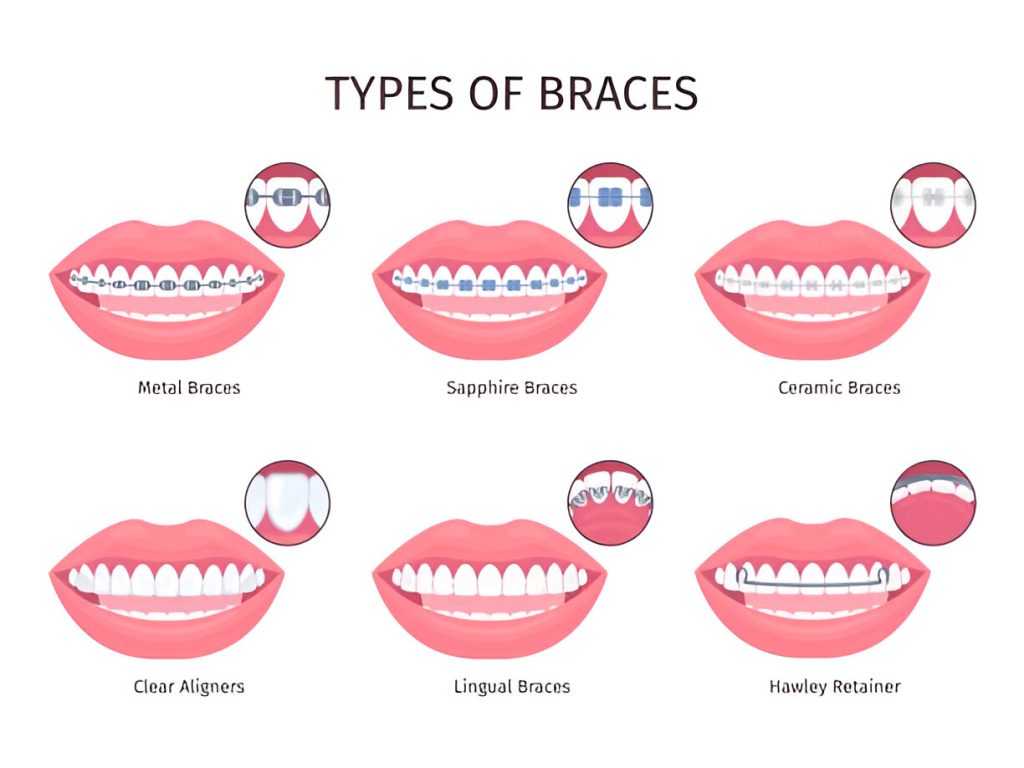
Orthodontic treatments like metal braces, ceramic braces, lingual braces, and clear aligners can fix crooked teeth and bite issues, improving confidence and oral health. This guide highlights the benefits of each option to help you choose the best fit for your needs.
Metal Braces: The Time-Tested Classic
Metal braces represent the most traditional and widely recognized form of orthodontic treatment. These consist of stainless steel brackets bonded to the front of your teeth, connected by metal wires and secured with elastic bands or ligatures.
How Metal Braces Work
The orthodontist attaches small metal brackets to each tooth using dental cement. A thin archwire runs through these brackets, applying gentle, continuous pressure to gradually move teeth into their proper positions. During regular adjustment appointments, the orthodontist tightens or replaces the wire to maintain progress toward your treatment goals.
Advantages of Metal Braces
Durability stands out as the primary benefit of metal braces. Made from high-grade stainless steel, these braces withstand daily wear and the forces required for tooth movement. They rarely break or need emergency repairs, making them ideal for active individuals or those who might not be as careful with their orthodontic appliances.
Cost-effectiveness makes metal braces accessible to more families. They typically represent the most affordable orthodontic option, with many insurance plans providing better coverage for traditional braces compared to newer alternatives.
Treatment efficiency often favors metal braces as well. The strong materials and direct attachment method can sometimes achieve results faster than other options, particularly for complex cases requiring significant tooth movement.
Disadvantages of Metal Braces
Aesthetic concerns top the list of drawbacks for metal braces. The highly visible brackets and wires can make some patients feel self-conscious about their appearance during treatment, especially adults in professional settings.
Oral hygiene becomes more challenging with metal braces. Food particles easily get trapped around brackets and wires, requiring meticulous brushing and flossing to prevent decay and gum disease.
Ceramic Braces: A More Discreet Option
Ceramic braces function identically to metal braces but use tooth-colored or clear ceramic brackets instead of stainless steel. This design choice makes them significantly less noticeable while maintaining the effectiveness of traditional braces.
How Ceramic Braces Work
The treatment process mirrors that of metal braces exactly. Ceramic brackets attach to teeth using dental cement, and metal wires guide tooth movement through controlled pressure. The only difference lies in the bracket material, which blends with your natural tooth color.
Advantages of Ceramic Braces
Improved aesthetics represent the main advantage of ceramic braces. The brackets match your tooth color, making them much less obvious than metal alternatives. This discretion appeals to adults and teenagers who want effective treatment without the metallic appearance.
Treatment effectiveness matches that of metal braces. Since the mechanics remain identical, ceramic braces can handle the same range of orthodontic issues with similar timeframes and results.
Disadvantages of Ceramic Braces
Higher costs accompany the aesthetic benefits of ceramic braces. The specialized materials and manufacturing processes make them more expensive than traditional metal options, both for initial treatment and any necessary repairs.
Staining potential presents another concern. While the brackets themselves resist discoloration, the elastic ties that secure the wire can absorb colors from foods and drinks, requiring more frequent adjustments to maintain their appearance.
Increased fragility means ceramic brackets may chip or break more easily than metal ones, particularly in patients who grind their teeth or engage in contact sports.
Lingual Braces: The Invisible Solution
Lingual braces offer the ultimate in discretion by placing all components on the tongue side of teeth. This positioning makes them completely invisible from the front while providing the same corrective power as traditional braces.
How Lingual Braces Work
Custom-made brackets attach to the back surfaces of teeth, with wires connecting them just like conventional braces. The placement requires specialized training and techniques, as orthodontists like those in Taylorsville must work in the more confined space behind teeth while maintaining precise control over tooth movement.
Advantages of Lingual Braces
Complete invisibility stands as the primary benefit of lingual braces. No one can see them during normal social interactions, making them ideal for professionals, performers, or anyone who prioritizes aesthetic concerns during treatment.
Full treatment capability means lingual braces can address the same orthodontic issues as other fixed appliances, including complex cases that might not respond well to removable aligners.
Disadvantages of Lingual Braces
Higher costs reflect the specialized nature of lingual braces. The custom fabrication process, specialized materials, and additional training required for orthodontists make them the most expensive fixed brace option.
Initial discomfort typically exceeds that of other braces types. The tongue constantly contacts the brackets and wires, causing soreness and potential speech difficulties during the adjustment period. Most patients adapt within a few weeks, but the initial experience can be challenging.
Longer appointment times and more complex adjustments result from the difficult access to brackets positioned behind teeth. Treatment may also take longer overall due to the technical challenges involved.
Clear Aligners: The Removable Revolution
Clear aligners represent the newest approach to orthodontic treatment, using a series of custom-made, transparent plastic trays to gradually move teeth. Popular brands like Invisalign have made this option increasingly mainstream.
How Clear Aligners Work
Computer modeling creates a precise treatment plan showing how teeth will move throughout the process. Based on this plan, a series of clear plastic aligners are manufactured, each designed to move teeth slightly closer to their final positions. Patients wear each aligner for about two weeks before progressing to the next in the series.
Advantages of Clear Aligners
Removability offers unmatched convenience. Patients can remove aligners for eating, drinking anything other than water, and oral hygiene routines. This eliminates food restrictions and makes maintaining dental health much easier than with fixed braces.
Near-invisibility appeals to those who want discreet treatment. The clear plastic material makes aligners barely noticeable during wear, allowing patients to undergo orthodontic treatment without obvious signs.
Comfort typically exceeds that of fixed braces. Smooth plastic edges don’t irritate soft tissues like brackets and wires can, and the gradual pressure feels gentler to many patients.
Disadvantages of Clear Aligners
Discipline requirements can challenge some patients. Success depends on wearing aligners for 20-22 hours daily, removing them only for meals and oral hygiene. Patients who frequently forget to wear their aligners may experience delayed results or treatment failure.
Higher costs often accompany clear aligner treatment. While prices have become more competitive, they typically exceed those of traditional metal braces, especially for complex cases requiring longer treatment times.
Limited effectiveness applies to certain orthodontic issues. Severe crowding, significant bite problems, or cases requiring tooth extraction may respond better to fixed braces than removable aligners.
Conclusion
The best type of braces depends on your needs and preferences. Metal braces are affordable and effective for complex cases, ceramic braces are more discreet, lingual braces are invisible, and clear aligners are convenient for mild to moderate issues. Consult an orthodontist to find the right fit for your lifestyle and goals.
