
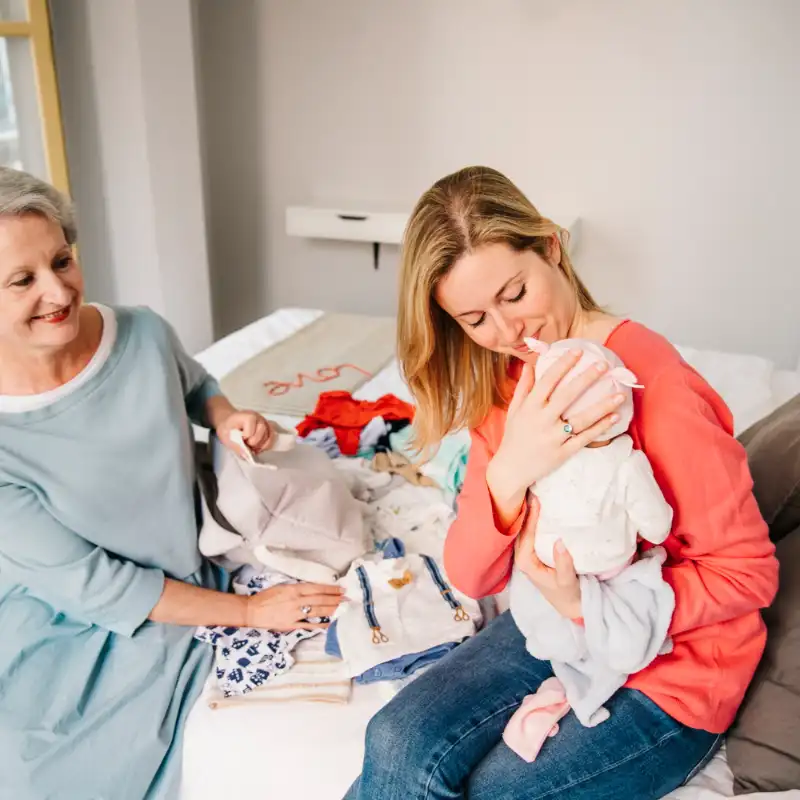
A Woman’s Reproductive Years and the Possibility of Maintaining Beauty During Late MotherhoodThe world around us is changing at an incredible pace. Women today manage to do absolutely everything—they build successful careers, lead major businesses, travel, pursue personal projects, and are constantly learning new things. In this fast-paced race, having a child is often postponed until a more mature stage of life, when a stable foundation has already been established.
Statistics confirm this social shift. According to the U.S. Centers for Disease Control and Prevention, the average age of women at the birth of their first child rose from 21.4 years in 1970 to 26.8 years in 2017. A similar trend has been observed in the United Kingdom, where this figure rose from 25.6 years in 1920 to 29 years in 2018. Today, society views motherhood after age 30 or 35 as a fully mature and conscious choice.
However, behind these appealing social trends lies a harsh biological reality. Social attitudes may change, but female physiology remains conservative. The body operates according to a program laid down by nature, which takes no account whatsoever of business success or the search for the ideal partner. Timely pregnancy planning helps not only to give birth to a healthy baby but also to preserve a woman’s greatest assets—namely, her beauty, high energy levels, and health—for many years to come.
How a Woman’s Internal Timer Works
A woman’s youth and attractiveness depend directly on the functioning of her reproductive system. Sex hormones, especially estrogens, are the main drivers of this process. They are responsible for skin elasticity, shiny hair, strong bones, a good mood, and heart health.
The ability to conceive is limited. Unlike in men, whose sex cells are regularly replenished, a girl’s supply of eggs is established even before her birth, during the prenatal period. This supply is called the ovarian reserve.
A newborn girl possesses a vast reserve of approximately one to two million oocytes. By the time of puberty, this number decreases to three hundred or four hundred thousand. With each menstrual cycle, this precious reserve steadily dwindles.
After age 37, the loss of follicles accelerates rapidly. At the same time, the quality of the eggs declines, as they have been exposed to stress, toxins, and free radicals throughout a woman’s life. A decrease in ovarian reserve leads to hormonal fluctuations, which inevitably affect the condition of the skin and the body’s overall vitality.
Menopause and Preserving the Sources of Youth
The onset of menopause marks the end of the reproductive cycle. This is a natural and inevitable process accompanied by significant physiological changes. The number of oocytes drops to a critical minimum, menstrual cycles cease entirely, and ovulation stops. At the same time, age-related involution of the endometrium occurs, during which the uterine lining loses its ability to accept an embryo.
Nature has provided a delicate mechanism for adapting to this new state. The ovaries do not cease functioning immediately. Their residual hormonal function persists for several years after menstruation stops.
This support is necessary for the smooth readjustment of all bodily systems. It gently protects blood vessels from atherosclerosis, shields the heart from strain, strengthens bone tissue, and helps a woman maintain excellent well-being, a radiant appearance, and inner harmony.
The Balance Between Safe Motherhood and Women’s Health
Doctors agree that the most favorable period for having a first child is between the ages of 20 and 28. It is advisable to plan for a second child before reaching the age of 35. During this “golden period,” the quality of genetic material is at its highest, the tissues of the birth canal are elastic, and the body possesses tremendous resilience. Pregnancy at a young age is easy, and the body’s figure and skin tone recover almost imperceptibly.
Planning a pregnancy after age 35 or 36 requires a woman to pay closer attention to her body. During this period, certain medical risks increase, and it is important to be aware of them in advance.
Genetic risks are associated with the aging of eggs. The likelihood of chromosomal abnormalities in the fetus, including Down syndrome, increases with each passing year.
Cardiovascular risks stem from the fact that carrying a child places an enormous strain on the mother’s heart and blood vessels. Circulating blood volume increases by nearly one and a half times, and a mature body requires more resources to adapt.
Gestational risks include the development of conditions such as preeclampsia, gestational diabetes, and fetal hypoxia. These conditions can negatively affect a woman’s well-being and require medical intervention.
Obstetric risks manifest during labor. Due to reduced tissue elasticity, labor weakness occurs more frequently, increasing the likelihood of a cesarean section.
Understanding these risks should not be a cause for alarm. It helps in developing a well-thought-out plan of action that will protect the health of both mother and child.
Comprehensive Preparation as the Key to a Healthy and Successful Delivery
A mindful approach to planning a pregnancy after age 35 helps minimize all potential risks. This is a time when you need to pay special attention to your physical condition. The preparatory protocol consists of several important steps.
It’s best to start with genetic testing. Analyzing the couple’s karyotype helps rule out hidden hereditary conditions and ensures the birth of a healthy child.
Weight management plays a key role in maintaining beauty and fertility. Being overweight triggers hormonal imbalances, worsens skin condition, and complicates pregnancy. Normalizing body weight restores ease of movement and balances hormone levels.
Medication is prescribed by a doctor to gently regulate the body’s functions. It helps balance hormone levels, improve blood clotting, and prepare the endometrium for successful implantation. As a result, the skin retains its freshness, and hair remains thick and shiny.
Surgical preparation methods are used when it is necessary to remove fibroids, polyps, or endometrioid cysts. Clearing the uterine cavity creates ideal conditions for fetal development.
Professional psychological support helps women cope with inner fears and anxieties. Calmness and confidence lower levels of the stress hormone cortisol, which has a detrimental effect on a woman’s youthfulness and hinders conception.
Assisted reproductive technologies in the service of motherhood and beauty
Advanced age is no obstacle to fulfilling the dream of having a child. Modern reproductive medicine can work wonders, allowing women to become mothers without compromising their own health and beauty.
In vitro fertilization using the woman’s own eggs is the first step if her ovarian reserve still allows for the retrieval of high-quality oocytes.
In some cases, advanced cellular technologies are used, such as pronuclear transfer or mitotic spindle transfer. These techniques help address the issue of aging cytoplasm in the mother’s egg while preserving its genetic nucleus.
When a woman’s own egg supply is depleted, the IVF with donor eggs program comes to the rescue. This method is recommended in cases of low anti-Müllerian hormone levels, following major ovarian surgery, or when there is a high risk of passing on hereditary diseases through the maternal line. The use of young, healthy donor cells spares a mature woman from having to undergo aggressive ovarian hormonal stimulation. This preserves her health, protects her endocrine system, and prevents premature skin aging. The key to success here is a healthy endometrium capable of receiving an embryo.
For the most complex situations, there is a double-donor IVF program. It involves the simultaneous use of a donor egg and donor sperm. This approach is used in cases where both partners lack viable gametes, as well as for single women of mature age with depleted ovarian reserves. Double donation offers a woman a unique opportunity to carry, give birth to, and nurse her baby on her own, experiencing the fullness of motherhood while preserving her own vitality and health.
Donated frozen embryos and surrogacy programs are used in situations where the woman herself cannot carry a pregnancy to term due to strict medical contraindications.
The Balance Between a Young Body and a Mature Mind
The timing of having a child is always a personal choice. Every decision has its own merits.
Mature mothers approach parenthood with the utmost responsibility. They are emotionally stable, their family relationships have stood the test of time, and their financial independence allows them to provide their child with the best conditions for development. Such women know how to take care of themselves; they take a conscious approach to nutrition, exercise, and skincare, which helps them look stunning.
Youth offers natural biological advantages. Before the age of 30, egg quality is optimal, the risks of genetic errors are minimal, and the body recovers from childbirth in the shortest possible time. Young mothers are full of physical energy, which helps them easily handle the daily demands of caring for a newborn.
How to Protect Your Reproductive Future and Beauty
If you’ve decided to postpone motherhood, do so in a way that’s right and safe for your body. Simple preventive measures will help you preserve your youth and reproductive potential.
Assess the condition of your ovaries. A visit to a reproductive specialist, an ultrasound exam, and a blood test for anti-Müllerian hormone will provide an accurate picture of your reproductive potential.
Consider oocyte cryopreservation. Freezing your own eggs at a young age allows you to pause the biological clock. This is a reliable safety net that will allow you to give birth to a child who is genetically your own when you are fully ready.
Treat gynecological conditions promptly. Any hidden inflammation can block the fallopian tubes and damage the endometrium, making it harder to conceive in the future.
Lead a healthy and active lifestyle. A balanced diet, regular sleep, avoiding harmful habits, and moderate exercise protect your cells from oxidative stress, preserving your skin’s youthfulness and the high quality of your future child’s genetic material.
Professional support on your journey to long-awaited parenthood
Physiology defines the optimal window for conception as between the ages of 20 and 35. But thanks to the tremendous advances in medicine, these boundaries have become incredibly flexible.
Every case is unique. Success depends on many factors, among which overall health, a healthy lifestyle, and timely consultation with experts play a decisive role.
The specialists at the NatuVitro Reproductive Medicine Clinic are ready to walk this journey alongside their patients. Our team of professionals provides attentive care, preserving a woman’s health and natural beauty at every stage—from careful planning to the joyful moment of childbirth. Thorough preparation and a truly personalized medical approach help make the cherished dream of motherhood a reality at any age, while maintaining a youthful and radiant appearance.
Answers to Frequently Asked Questions
Is it possible to conceive naturally after age 40?
Yes, it is possible, but the likelihood is significantly lower than at a younger age. The chance of conceiving within a single cycle after age 40 is about five percent. This is due to a natural decline in the egg reserve and a decrease in the frequency of ovulation.
How does a late pregnancy affect a woman’s beauty and youthfulness?
A late pregnancy can be a powerful stimulus for rejuvenating the body thanks to estrogen production, but it requires significant internal resources. To ensure that pregnancy leads to rejuvenation rather than exhaustion, it is important to approach it in a balanced way, first addressing any vitamin deficiencies and monitoring your diet and skin under the supervision of specialists.
What Are the Characteristics of IVF with Donor Oocytes?
This program involves the use of eggs from a young, healthy female donor. The main advantage is that the prospective mother does not need to undergo intensive ovarian hormonal stimulation to obtain her own eggs. This significantly reduces the medication burden on her body, preserving her health and natural beauty, while increasing the procedure’s success rate severalfold.
Who Is the Best Candidate for Double-Donor IVF?
The double-donor program is ideal for married couples diagnosed with severe combined infertility, where neither the husband nor the wife can produce high-quality gametes. This method is also often chosen by single women of mature age who wish to carry and give birth to a healthy child while avoiding genetic risks and excessive hormonal stress on their bodies.
Is the in vitro fertilization procedure safe for the health of a woman of mature age?
The procedure is completely safe provided that a comprehensive preliminary examination is conducted. Doctors carefully assess the condition of all the body’s systems to rule out any contraindications to pregnancy. To ensure maximum safety for the fetus in a woman of mature age, genetic testing of the resulting embryos is mandatory before they are transferred to the uterine cavity.
