
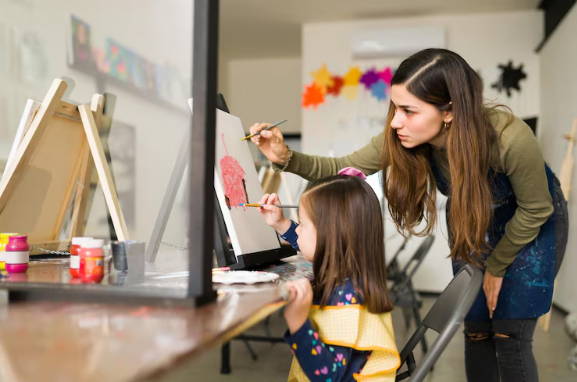
Art is often seen as a recreational activity, but it can also provide children with opportunities to develop observation, imagination, patience, and self-expression. Through activities such as drawing, painting, sculpture, and mixed-media work, children can explore ideas while gradually building practical artistic skills.
A structured art programme may also introduce children to different materials and techniques over time, allowing them to experiment while developing a stronger understanding of visual expression.
Art Encourages Creative Thinking
Creative activities give children the opportunity to approach ideas in different ways. When working on an artwork, a child may need to make decisions about colours, shapes, composition, materials, and the way an idea is presented.
There is often more than one possible outcome, which encourages experimentation and independent thinking. Over time, this process can help children become more comfortable exploring different approaches rather than focusing only on finding a single correct answer.
Developing Observation Skills
Drawing and other visual art activities often encourage children to look more closely at the world around them.
For example, observational drawing may involve paying attention to:
- Shapes and proportions
- Light and shadow
- Colours and textures
- Distance and perspective
- Relationships between different objects
These skills can develop gradually through regular practice. A structured learning environment may help children progress from simple visual exercises towards more detailed or technically demanding work.
Building Fine Motor Skills
Many art activities involve controlled hand movements. Holding a pencil, using a paintbrush, cutting materials, shaping clay, or working with small details can all require coordination.
The level of complexity should be appropriate for the child’s age and stage of development. Younger children may focus more on exploration and basic handling of materials, while older students may spend more time developing precision and technique.
The Value of Learning Different Art Forms
Exposure to different artistic methods can give children a broader understanding of creative expression. Depending on the programme, students may explore areas such as:
- Drawing and sketching
- Painting
- Clay and sculpture
- Mixed media
- Digital art
- Photography
- Art history and visual references
Different activities can appeal to different interests and strengths. Exploring a variety of mediums may also help a child discover the type of creative work they enjoy most.
Why Age-Appropriate Learning Matters
Children at different stages of development may benefit from different approaches to art education.
Younger children may benefit from activities that focus on sensory exploration, imagination, and basic creative skills. As they grow older, they may be ready to explore more structured concepts such as composition, perspective, colour theory, observation, and technical techniques.
For this reason, parents may find it useful to look at how an art programme is structured across different age groups rather than choosing a class based only on convenience or the type of activity offered.
What to Look for in an Art Programme
When exploring art classes, it can be helpful to consider several factors:
Learning Structure
A programme may offer either open-ended creative sessions or a more structured progression of skills. The right approach can depend on the child’s interests and goals.
Range of Activities
Some programmes focus on a particular medium, while others introduce students to multiple forms of art. A broader range can provide opportunities for experimentation.
Class Environment
The learning environment can influence how comfortable a child feels participating and trying new techniques. Class size, teaching style, and the level of individual guidance may all be relevant considerations.
Progression Opportunities
Older children and teenagers may eventually want to develop more advanced skills, specialise in a particular medium, or work on a portfolio. Looking at the available progression options can therefore be useful when choosing a longer-term programme.
For parents researching structured programmes for children, Little-Artists offers art classes across different age groups, with programmes covering areas such as drawing, painting, mixed media, digital art, photography, and portfolio development.
Art as a Process of Practice
Artistic development usually takes time. While completing a finished artwork can be rewarding, the process of learning can also involve making mistakes, revising ideas, and trying techniques repeatedly.
This process may help children understand that improvement often comes through practice. A drawing that does not turn out as expected can become an opportunity to identify what could be changed or improved in the next attempt.
Encouraging children to focus on the process, rather than only the final result, can create a more positive approach to creative learning.
Supporting a Child’s Interest in Art
Parents do not necessarily need to create a highly structured environment at home for a child to enjoy art. Providing time, encouragement, and access to suitable materials can help support creative exploration.
It can also be useful to:
- Allow children to experiment with different ideas
- Avoid placing too much emphasis on creating a “perfect” result
- Encourage them to talk about their artwork
- Introduce different artists and styles
- Give them opportunities to practise regularly
For children who show a stronger interest in art, additional guidance through age-appropriate classes or workshops may help them develop their skills further.
Conclusion
Art education can offer children more than an opportunity to learn how to draw or paint. Through regular creative practice, they can explore ideas, develop observation skills, improve their familiarity with different materials, and build confidence in expressing themselves visually.
The most suitable learning environment will depend on the child’s age, interests, and goals. Considering the teaching approach, range of activities, opportunities for progression, and overall learning environment can help parents choose an art experience that supports their child’s individual creative journey.
Read more : The Art of Using Debt Without Losing Sleep
