
Table of Contents
- Benefits of Word Games for Early Literacy
- Recommended Word Games for Children
- Incorporating Word Games into Daily Routines
- Digital vs. Traditional Word Games
- Impact of Word Games on Children with Learning Differences
- Conclusion
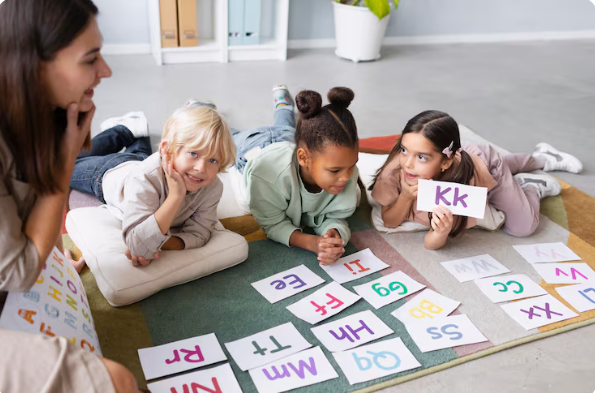
Word games are more than just fun activities for children; they are effective educational tools that foster essential early literacy skills. By introducing language-focused games, parents and educators can make the process of learning to read both enjoyable and highly beneficial for young learners. Many families and teachers already use literacy games for kids to add variety and excitement to reading practice at home or in the classroom. These engaging experiences not only keep children motivated but also help cement the building blocks of reading success. Research supports the idea that play-based learning approaches (such as word games) lead to stronger language and reading outcomes, which is why it’s important to understand the advantages and how to make the most of these powerful tools.
Benefits of Word Games for Early Literacy
Introducing word games into a child’s routine can lead to measurable improvements in language and reading skills. Research shows that structured language play, even in short bursts, enhances vocabulary, spelling, phonological awareness, and the ability to recognize and manipulate sounds and letters. For example, a study from the University of Gothenburg demonstrated that children as young as four could experience significant language development gains through consistent play with structured language games. This development not only supports reading readiness but also boosts confidence and engagement among young learners. The advantages extend beyond mere entertainment. Word games help children acquire critical thinking and problem-solving abilities as they form words, recall vocabulary, and understand language patterns. These early experiences create a strong foundation for more advanced reading and comprehension skills in later schooling years.
Recommended Word Games for Children
Choosing the right word games is important for maximizing literacy growth. Here are several top recommendations for boosting early reading abilities:
- Bananagrams: Players race to create their own crossword grids, quickly generating words that strengthen spelling, vocabulary, and pattern recognition.
- Scrabble Junior: A kid-friendly adaptation of Scrabble, this game introduces young learners to word formation, word recognition, and spelling through a simpler board.
- Rhyme Bingo: This verbal and visual game encourages children to identify and produce rhyming words. Playing Rhyme Bingo promotes phonological awareness, an essential early literacy skill.
Incorporating activities like word puzzles and rhyming games is also beneficial. These games can be adjusted in complexity as your child’s skills progress, ensuring a continued challenge and ongoing engagement.
Incorporating Word Games into Daily Routines
Making word games a regular part of your child’s day doesn’t require a drastic schedule change. Simple strategies include setting aside a few minutes each day for a favorite language game, using car rides or lines at the grocery store to play “I Spy” with letters and sounds, or encouraging children to invent their own simple word challenges. Involving the whole family can turn literacy practice into a bonding experience.
Consistent, low-pressure exposure to language play at home and in educational settings is key. Variety also matters; rotating different games and activities keeps children interested and allows them to exercise different aspects of reading and language development. To further enhance learning at home, families can also create word treasure hunts, label household items in different languages, or use coloring books focused on new vocabulary. These simple activities not only reinforce reading and language skills but also add playful, hands-on learning to everyday settings. Regular exposure to new words in positive contexts helps children build an expansive vocabulary over time. Encouraging kids to share new words they learn each day fosters communication skills and builds their excitement for reading. With just a little creativity, even chores or errands can become opportunities for valuable wordplay.
Digital vs. Traditional Word Games
While the prevalence of digital games and educational apps continues to grow, it is important to balance technology-based play with hands-on, traditional games. According to a Michigan State University study, print-related and interactive physical activities tend to produce greater early literacy gains in preschoolers compared to digital formats alone. The research suggests that activities such as writing letters, creating word lists with magnetic tiles, and pointing out words during daily life interactions are especially effective. Study Finds Print Wins Over Digital for Preschoolers Learning to Read.
Nevertheless, selected digital games can supplement traditional activities when used thoughtfully. The key is to ensure children engage interactively with language rather than passively consume digital content. Blending both approaches helps maintain motivation and exposes children to a wide range of linguistic skills.
Impact of Word Games on Children with Learning Differences
Word games are particularly supportive for children with learning differences such as dyslexia or speech and language delays. Structured and repetitive gameplay can reinforce foundational skills in a non-threatening, positive environment. Research from the University of Cambridge, for instance, highlights the potential of specially designed games to improve reading outcomes for children with dyslexia and those from under-resourced backgrounds. Adapting the complexity and format of games to a child’s individual needs allows for more inclusive learning. Involving speech-language professionals or literacy specialists can further tailor these activities to support unique learning requirements.
Conclusion
Integrating word games into daily routines is a proven strategy for supporting early reading development in children. By thoughtfully selecting language games, maintaining a balance between digital and traditional formats, and individualizing activities to accommodate learning differences, parents and educators can give children the best possible start on their reading journey. Word games make learning exciting, interactive, and ultimately more successful for all learners.
