
Table of Contents
- Introduction
- Understanding As-Is Sales
- Pros of Selling As-Is
- Cons of Selling As-Is
- Legal Requirements and Disclosures
- Pricing Strategies for As-Is Homes
- Attracting the Right Buyers
- Working with Real Estate Professionals
- Conclusion
Selling a house as-is in Raleigh, North Carolina, offers a practical solution for homeowners who want to avoid the hassle of repairs, renovations, and extensive preparation. This method can simplify the sales process, especially for those who want a quick transaction or who do not have the means for costly home updates. Companies that state, we buy houses in Raleigh, NC, often offer a straightforward option for these sellers. However, there are important considerations and responsibilities to keep in mind when choosing this route.
Understanding the unique aspects of an as-is sale is vital for Raleigh homeowners. This approach can be ideal for individuals facing financial hardship, inheriting unwanted properties, or simply seeking an efficient sale. However, navigating legal disclosure requirements, buyer expectations, and effective pricing strategies ensures a smooth, successful process.
Whether you are preparing to list your house or just exploring your options, this guide offers critical insights into selling as-is in Raleigh. The local property market, buyer demographics, and state-specific regulations all play a role in how quickly and effectively you can close a sale.
For homeowners in nearby regions seeking similar options, there are also companies ready to sell your home in Durham, NC, and other surrounding markets. With a clear plan and an informed approach, you can confidently achieve your property goals.
Understanding As-Is Sales
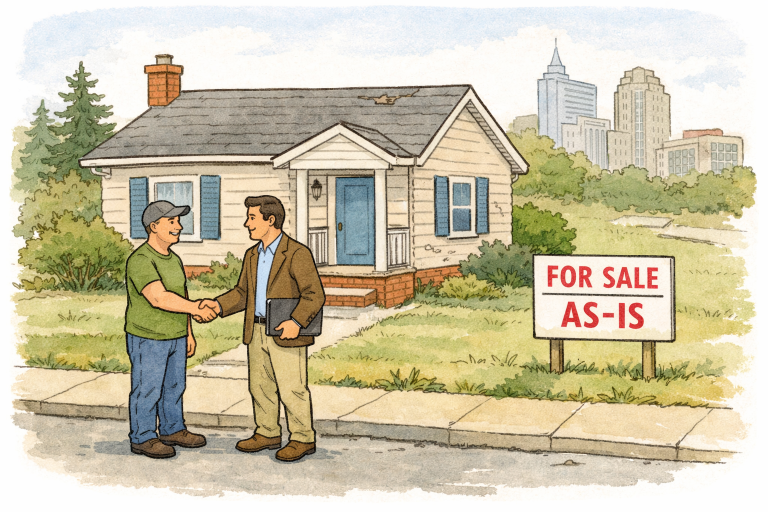
Selling a house as-is means putting it on the market in its current state, with no intention of making repairs or upgrades. The buyer is made aware upfront that any defects or issues will be their responsibility after purchase. While this can sound like a convenient shortcut, sellers in North Carolina must still be transparent regarding known problems with the home. Skipping this step can result in legal trouble and delays at closing, underscoring the importance of honesty and documentation throughout the process.
Pros of Selling As-Is
- Cost Savings: By avoiding repairs or cosmetic improvements, homeowners can keep more of the proceeds from the sale.
- Faster Transactions: Many as-is properties attract investors and cash buyers who can close quickly, reducing the time your property spends on the market.
- Reduced Stress: Avoiding the uncertainty and overwhelm of renovation projects allows sellers to focus on moving forward with their lives.
Cons of Selling As-Is
- Lower Sale Price: Buyers might offer less to offset any repair costs and perceived risks associated with unknown issues.
- Limited Buyer Pool: The market for as-is homes often consists of investors or buyers specifically seeking fixer-uppers, which can narrow your audience.
- Disclosure Obligations: North Carolina law still requires honesty about known defects, and failing to do so can result in legal challenges.
Legal Requirements and Disclosures
North Carolina’s real estate laws require sellers to furnish a Residential Property and Owners’ Association Disclosure Statement outlining the condition of the property and its systems. Even in an as-is sale, you cannot conceal known problems. In fact, transparency helps build buyer trust and can reduce renegotiations or last-minute cancellations during escrow. Consulting a real estate attorney or qualified agent can ensure all legal steps are covered.
Pricing Strategies for As-Is Homes
Fair and accurate pricing is perhaps the most important factor in an as-is sale. Overpricing an as-is home can cause it to linger unsold, while underpricing it could mean leaving significant money on the table. Homeowners are encouraged to conduct a Comparative Market Analysis (CMA) to understand how their property compares with others of similar size, age, and condition. A CMA uses recent sales data to create a pricing baseline, helping sellers strike the right balance between attracting buyers and maximizing their return.
Attracting the Right Buyers
Not every buyer is interested in homes that need work. The most common audience for as-is sales in Raleigh includes real estate investors, house flippers, contractors, and even first-time buyers who are looking for bargains. Effective marketing should emphasize the potential upsides, such as lot size, school district, or location near amenities, to capture buyer attention. Leveraging online listing platforms and real estate networks can increase exposure to qualified, motivated buyers.
Working with Real Estate Professionals
Even though selling as-is seems straightforward, working with a real estate agent who knows the Raleigh market can make all the difference. Agents help set market-appropriate prices, stage the property for maximum appeal, and navigate disclosures and negotiations. Their expertise is especially valuable in identifying buyers likely to close without complications and in handling complex transactions. It is wise to interview multiple agents, check local reviews, and ask about their experience in as-is sales before choosing a representative.
Conclusion
Selling your house as-is in Raleigh, NC, is a practical choice for those who want a fast sale and minimal pre-market investment. However, success hinges on understanding legal obligations, transparent disclosure, realistic pricing, and effective marketing to the right buyer pool. By tapping into professional guidance and staying informed, homeowners can maximize their outcomes with confidence and peace of mind.
