
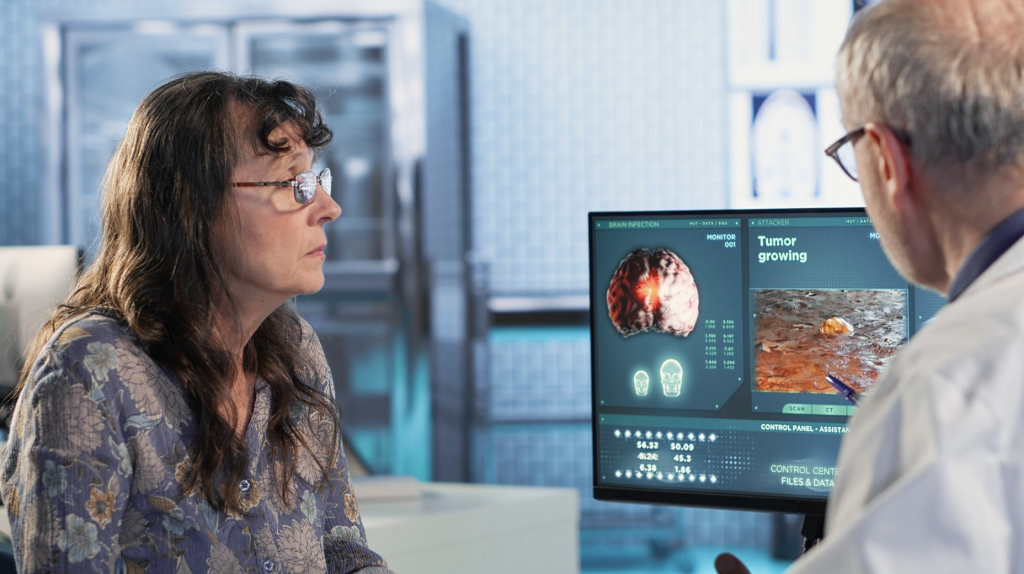
New technologies are being evaluated for gastric cancer diagnosis and treatment. Whether for imaging, pathology, molecular diagnostics or treatment, new technologies are being rapidly developed for individual patients with gastric cancer.
For individual patients or for groups of patients with similar gastric cancers, established methods of gastric cancer treatment (e.g. gastric cancer surgery, chemotherapy for gastric cancer, radiation for gastric cancer) are now typically given in combination with newer, targeted therapies for gastric cancer and immunotherapies for gastric cancer.
Improving the Diagnosis of Gastric Cancer
Modern gastric cancer diagnosis by endoscopy is performed in a similar manner to other cancers. The lining of the stomach is examined by the endoscopy for any signs of gastric cancer. The abnormal area is then biopsied and sent to a pathologist for a diagnosis to see if cancer is present. The pathologist can then confirm the presence of gastric cancer and also examine the tumor to see the type of gastric cancer and to assess its characteristics.
The work of a pathologist in a laboratory to confirm a diagnosis of gastric cancer and to provide the most detailed information possible on the nature of a tumor, has reached an advanced stage of development. These diagnostic and treatment tools for other diseases can also assess the primary tumor in the stomach and the extent to which gastric cancer has spread to other parts of the body. These technologies may provide additional information to the clinician about gastric cancer treatment in the patient to support treatment decisions.
Understanding Tumor Through Biomarkers
Modern gastric cancer treatments have enabled us to examine the biological characteristics of cancer cells in detail. Biomarkers are proteins or other substances produced by cancer cells. In advanced gastric cancer, biomarkers can be tested to see if they are expressed by the cancer cells. These include: HER2, PD-L1, mismatch repair or microsatellite instability status, and CLDN18.2.
The results from biomarker testing can influence the treatment of advanced gastric cancer. However, results from biomarker testing are considered within the overall context of the cancer, its stage, location, prior treatment, the patient’s overall health, and treatment goals. Therefore, results from biomarker testing do not automatically mean that patients will be recommended for certain treatment. Understanding biomarker testing for gastric cancer can help the patient with the same or similar diagnosis of gastric cancer to better understand why their healthcare provider may be recommending a different gastric cancer treatment for similar cancer.
The Growing Role of Digital Pathology
Digital Pathology (DP) increases quality of diagnosis of cancer as well as treatment in the period after the medical procedure (such as an endoscopy) during which tissue samples are analyzed by a specialist in a laboratory. The process of digital pathology includes the production of digital versions of whole slides that can be viewed, shared and analyzed by specialists all over the world.
As technology advances further, there are even more computational tools emerging to analyze images of tissue samples, to identify patterns and make assessments based on these. As technology continues to develop to support the pathology laboratory, the findings will need to be interpreted by a qualified pathologist in the clinical situation of the individual patient.
Advances in Targeted Treatment
There are also new ways of gastric cancer treatment. These are targeted at the biological characteristics of the tumor cells. Another category of biomarkers is found in subsets of patients with cancer. Treatments are available that are specifically directed to the cancer cells of individual patients with cancer. Patients with gastric cancer of the gastroesophageal junction may have gastric cancer that is positive for the biomarker HER2. For treating these patients, HER 2 directed therapies may be considered. Some new gastric cancer treatments are designed to specifically target cancer cells.
Technology and Immunotherapy
Immunotherapy is a rapidly evolving field of cancer research that seeks to understand the interaction between cancer and the immune system of a patient with cancer.
Immune checkpoint inhibitors release the brakes on the immune system to allow it to attack cancer cells. These are typically used in patients with tumors expressing the biomarker PD-L1. In addition, cancers with mismatch repair (MMR) deficiency or high levels of microsatellite instability (MSI) are becoming established as predictors of benefit from use of immune checkpoint inhibitors. Researchers continue to investigate which patients might respond to these treatments and how to use them in combination with other anticancer therapies. Monitoring for side effects is also important.
New Ways of Monitoring Treatment
The same diagnostic tools used to evaluate gastric cancer may also be used to monitor a patient’s response to treatment and overall health during care. Monitoring may include assessment of symptoms, physical condition, imaging studies, and laboratory tests. Treatment plans may be adjusted over time based on ongoing evaluations of the cancer and the patient’s condition.
Researching the Next Generation of Treatments
Many of these new approaches are currently in clinical investigation. Some are now part of the treatment strategy for gastric cancer patients. Research is continually going on into new cancer treatments. For example, there are currently clinical trials for many new targeted therapies, antibody-drug conjugates, and various forms of immunotherapy as well as combinations of all these, for example, a targeted therapy plus an immunotherapy.
Time is needed for technologies to move from the lab to the clinic. New technologies go through many stages and need to be approved by health authorities before they can be prescribed to patients. Many new treatments need more evidence from clinical studies before they become a standard part of care for patients with cancer.
Keeping the Patient at the Center
Gastric cancer is a disease which must be treated individually. The information about the tumor as well as the information about the patient must be considered for a treatment decision.
Nutrition, physical condition, organ function, previous treatment, symptoms, other health problems the patient suffers from, treatment preferences and quality of life are considered in the treatment decision.
The main goal of supportive care in patients with gastric cancer treatment and their families is to manage symptoms and the adverse effects of treatment. A range of issues including nutritional support, symptom control, psychological support and information and communication with health care providers and others can be addressed.
Looking Toward Tomorrow
Future gastric cancer treatment may incorporate information from currently available molecular testing, imaging, pathology, targeted therapies, immunotherapy, and clinical trials.
The evolution of latest technologies for cancer treatment does not mean there will be only one treatment option in the future. New technologies provide more information to the doctor about the tumor and the patients. Future gastric cancer treatment may include many technologies currently in use, and a host of new ones. However, deciding on the appropriate treatment for a particular patient may depend on multiple factors.
Medical Disclaimer: The information provided in this article is intended for educational purposes only and should not be interpreted as medical advice, clinical guidelines, or a recommendation for any specific treatment. Please get the complete information from your healthcare professionals.
Read More: Best Practices for Healthcare Companies Seeking Investment Opportunities
